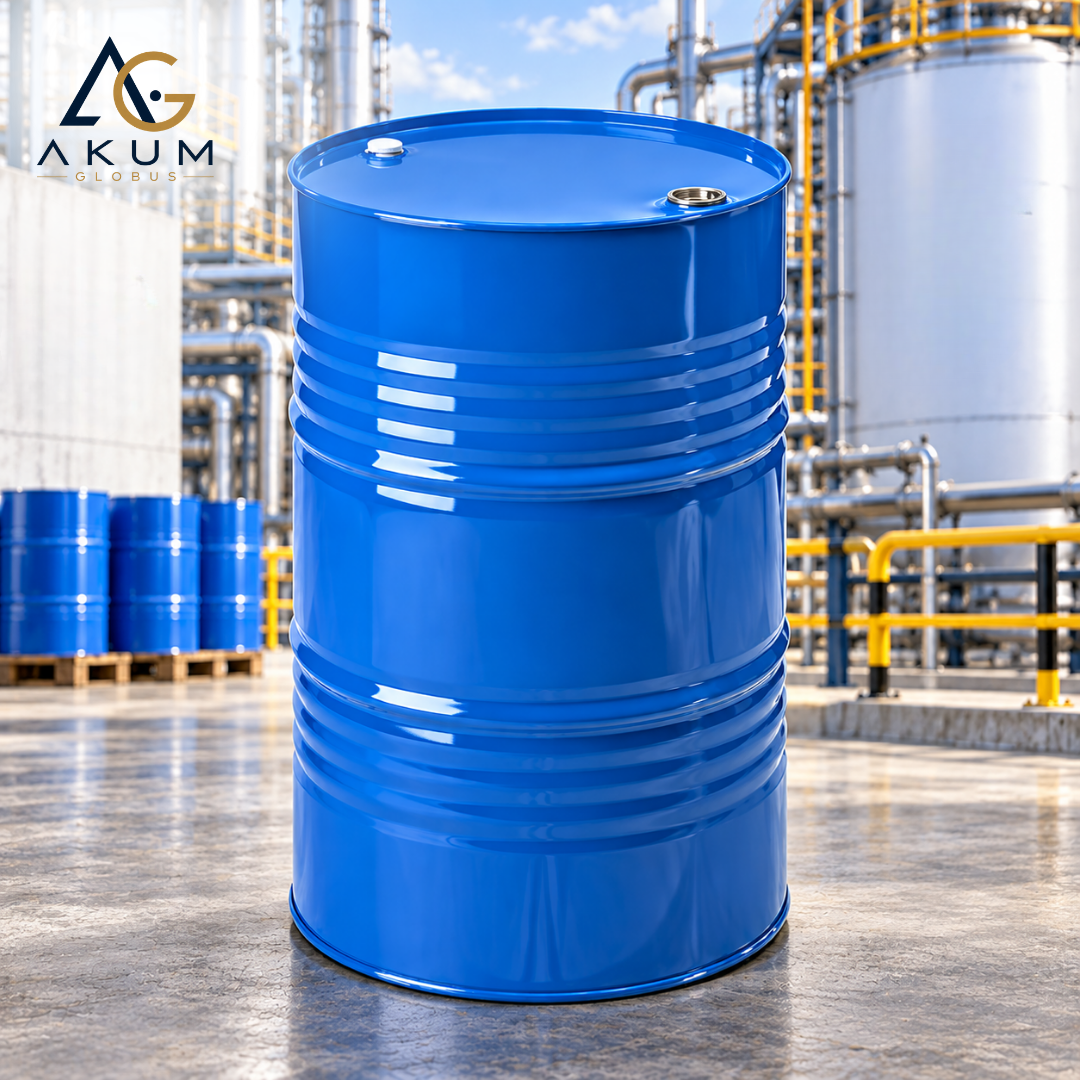
An air duct has to move conditioned air without losing the temperature it carries and without adding fuel to a fire, and both duties fall on the foam inside the wall. HVAC Insulation Polyol is a rigid polyether grade formulated so the core stays closed for thermal performance while the flame retardant package can do its work. Duct and equipment manufacturers use it for section panels, plenum insulation and equipment casings, and the top rated HVAC Insulation Polyol manufacturers are asked for a fire and thermal record, not a density figure alone.
Which polyol and foam structure suit an HVAC duct that must meet a fire performance requirement? A closed-cell core with a fine, even structure limits both heat transfer and the surface area that can feed a flame, so the polyol is chosen for cell control as much as for strength. The flame retardant package is then matched to the grade rather than added on top of it. A rigid polyol for HVAC duct insulation is approved with the fire test in view, and the density band is fixed at the same time.
Can the polyol be matched to a customer existing flame retardant package? It can, provided the package is declared before the grade is fixed, because an additive that works in one polyol can behave differently in another and change the cream and cure along the way. The reactivity is checked with the full package in place, not with the polyol alone. HVAC Insulation Polyol systems is therefore trialled with the customer additive in the mix, and the resulting figures are written into the approval.
A duct that meets its thermal target but fails a fire requirement is a rejected batch, and the cost of that rejection lands on the fabricator. The reverse is just as expensive, because an over-loaded flame retardant package can slow the cure and cut output. Buyers who have run both mistakes tend to settle on the best HVAC Insulation Polyol suppliers who test the full package, because the trial is cheaper than the rejection. A duct section tested with the actual additive is the sensible starting point.
Every polyol programme begins with a specification that has to survive the distance between the plant and the buyer. For buyers of Polyol for HVAC insulation In Rajasthan, that means fixing hydroxyl value, viscosity, moisture and reactivity before the first drum is filled, then repeating the same release checks on every batch. Buyers comparing top rated manufacturers of Polyol for HVAC insulation In Rajasthan can review the COA, the technical data sheet and a retained sample together. In Rajasthan, the grade they approve is the grade that reaches their store.
Scale-up is where a laboratory approval either holds or fails. Production for Polyol for HVAC insulation In Rajasthan runs in repeat windows that keep reactivity, foam rise and panel performance within the same band, which lets a buyer move from a trial drum to a full pallet without reopening the formulation. Anyone shortlisting best manufacturers of Polyol for HVAC insulation In Rajasthan should compare the second consignment with the first, inspect the batch record and confirm that the packing standard has not changed between releases. In Rajasthan, that consistency is what makes repeat supply predictable.
Supply reliability is tested when a line is already running and the next drum is due. A supply plan for Polyol for HVAC insulation In Rajasthan keeps the main grade, its packaging and its matching variants visible on one schedule, so a buyer can release a complete requirement instead of chasing parts of it. In Rajasthan, that planning is the practical difference behind best suppliers of Polyol for HVAC insulation In Rajasthan: the stock position, the dispatch date and the paperwork are confirmed together before the order is placed.
Requirements rarely stay fixed while an order is open. Quantities are revised, packing is changed and delivery dates move, and each revision has to be captured so the next release matches the last. A supply desk for Polyol for HVAC insulation In Rajasthan that records those changes gives buyers a single update covering stock, dispatch and documents. In Rajasthan, that single update is why the support of top rated suppliers of Polyol for HVAC insulation In Rajasthan is judged after delivery as much as at the quotation stage.
What is the point of a thermal figure if the foam cannot pass a fire test in the same duct? Very little, which is why top rated HVAC Insulation Polyol manufacturers and the best HVAC Insulation Polyol suppliers are judged on both results. Manufacturers and suppliers who test the flame retardant package together with the polyol save the fabricator a second trial.
Closed Cells for Thermal Duty : A fine, closed cell structure limits heat transfer through the duct wall and resists moisture pick-up in a humid air stream, and thermal performance of duct foam is checked against the specified value on every batch.
Flame Retardant Compatibility : The grade is matched to the additive package the fabricator already uses, because an incompatible package can slow the cure or leave the foam surface tacky, and flame retardant package compatibility is proven in a full trial.
Cream Time for Narrow Cavities : A duct section is often a narrow, long cavity, so the mix needs enough cream time to reach the far end before it rises, and cream time for narrow ducts is set from a sectioned trial.
Dimensional Stability in Service : Air movement and temperature cycling can make a poorly stabilised core bow away from the duct wall, so the grade is checked through a cooling cycle, and dimensional stability under service heat is recorded on the release sheet.
Density for Section Strength : A duct panel carries handling loads before it is installed, so density is held inside a band that gives stiffness without adding weight, and density control for duct sections is agreed with the fabricator.
Thermal and fire performance are tested together because they are bought together, and a grade that satisfies one at the expense of the other is no saving. Top rated HVAC Insulation Polyol manufacturers and best HVAC Insulation Polyol suppliers document both results, which is what manufacturers and suppliers of duct systems need before a specification is signed.
Ductwork, plenum sections, equipment casings and air handling enclosures all use rigid foam in a thin wall, and each one has a slightly different fire and thermal target. The best HVAC Insulation Polyol suppliers select the grade against the test the finished duct must pass, not against a general description. The uses below cover the patterns that come up most often.
Pre-Insulated Duct Panels : Factory-made duct panels are laminated around a rigid core, so the foam must bond to both skins and hold a closed cell, and pre insulated duct panel cores are approved on a full section.
Duct Liner Sections : A liner sits inside the air path, so the foam surface has to be clean and the cell structure fine enough to resist erosion, and duct liner foam sections are checked for surface quality.
Casings for Air Equipment : Casings around fans and coils need a stiffer core in a small cavity, so the density and the cream time are adjusted for the tool rather than the panel line, and casings for HVAC equipment are trialled as a unit.
Plenum and Riser Insulation : A riser runs vertically and a plenum sits close to moving air, so the foam must stay bonded under both conditions, and plenum and riser insulation is specified with a stability check.
Chiller and Pipe Sections : Curved sections and pipe supports leave little room for a void, so the shot weight is planned for the tightest point, and insulation for chiller pipework is proven on a sample bend.
Every one of those uses is judged by a test certificate and a section cut from the finished part. A grade that supports both results keeps the duct range on one approval, and best HVAC Insulation Polyol suppliers are chosen for the evidence they can hand over.
Why does a duct foam that passes in a laboratory fail when it is made on a production line? Because the additive, the density and the cure time interact, and a laboratory cup cannot reproduce a narrow cavity. The top rated HVAC Insulation Polyol manufacturers test the package at production density, and the best HVAC Insulation Polyol suppliers send the record with the drum. Manufacturers and suppliers who test only the resin leave the fabricator to find out.
Fire Test Evidence Provided : Results from the finished foam, with the additive package declared, are supplied with the grade so a fabricator can answer a specification question, and fire performance test evidence is kept current.
Thermal Figures Verified : Thermal conductivity is checked at the density the duct will actually run, because a figure taken at a lighter density does not describe the delivered part, and thermal conductivity at production density is stated on the sheet.
Trial With Your Additive : The customer flame retardant package is included in the trial rather than simulated, which shows how the cream and cure behave before a production order, and trials with customer additives are arranged on request.
Batch Records for Audits : A certificate of analysis tied to the drum supports a duct audit, and the batch number links the foam back to the polyol that produced it, with duct audit documentation issued at dispatch.
Changeover Advice for Sections : Moving from a panel to a casing or a liner changes the cavity, so the cream and shot weight are recalculated and issued as a note, and section changeover guidance saves a trial.
Evidence is the currency here. Top rated HVAC Insulation Polyol manufacturers and best HVAC Insulation Polyol suppliers give manufacturers and suppliers of ductwork a grade, a test record and a batch trail, and that combination is what a fire specification actually asks for.
Tell us the duct type, the fire requirement, the density target and the volume needed at [email protected], and a grade recommendation follows with the test evidence available. Akum Globus Pvt. Ltd. confirms the specification, the packing and the dispatch schedule in writing, and the flame retardant package is noted on the same document.
Explore our range of polyurethane chemicals and specialty solutions developed to support efficient processing, formulation flexibility, consistent quality, and reliable industrial performance.
Copyright © 2026 Akum Globus Pvt. Ltd.. All Rights Reserved. Designed By HD Smart Media