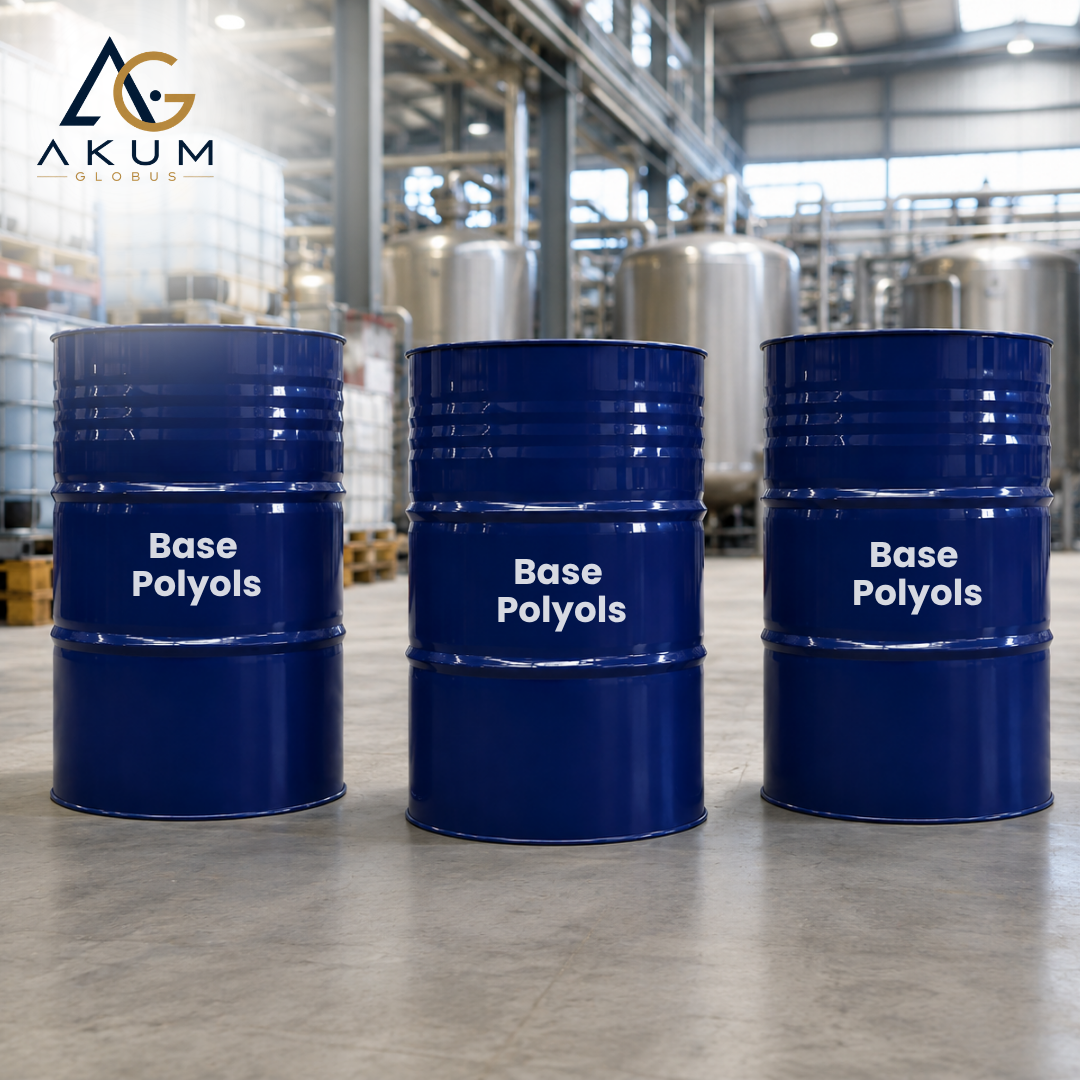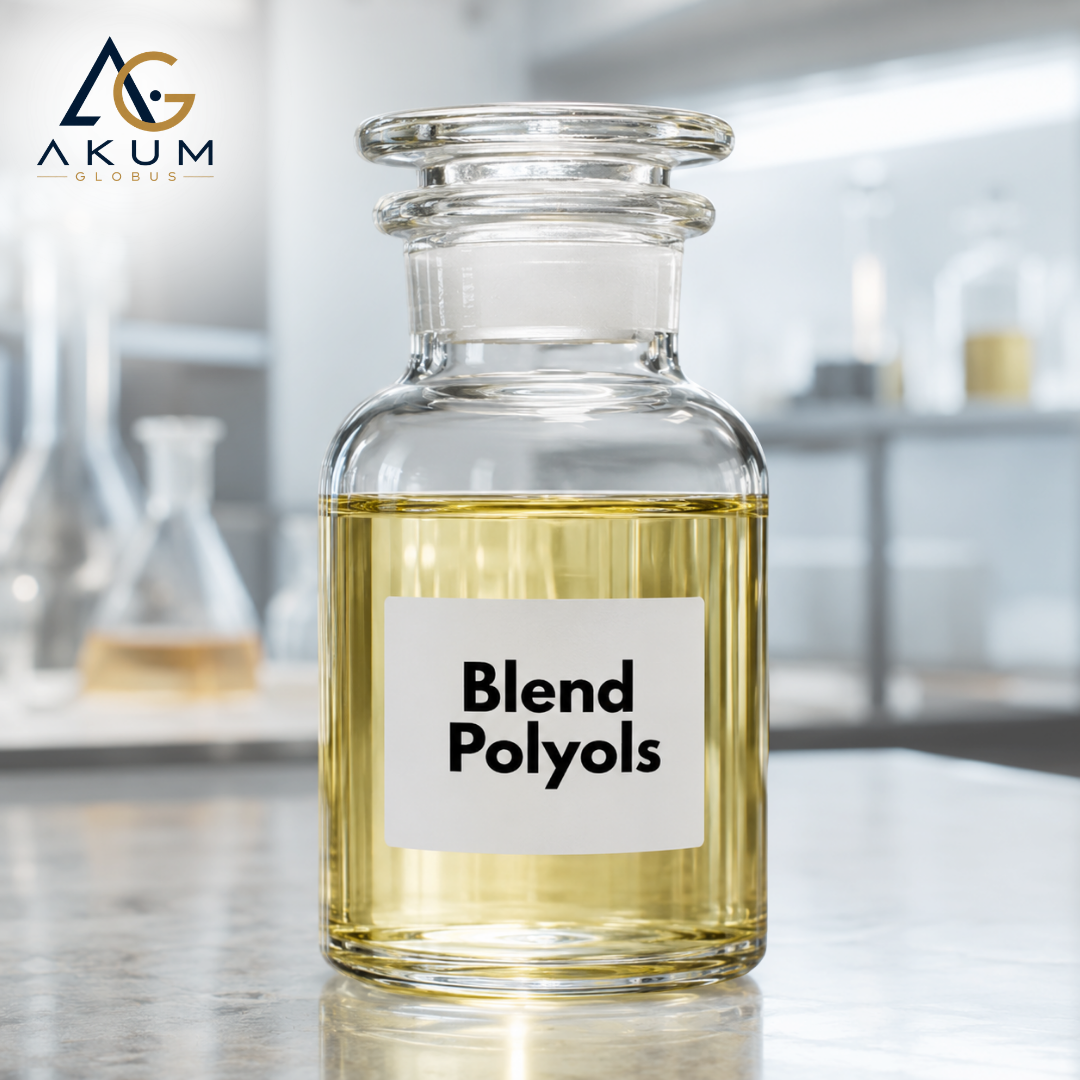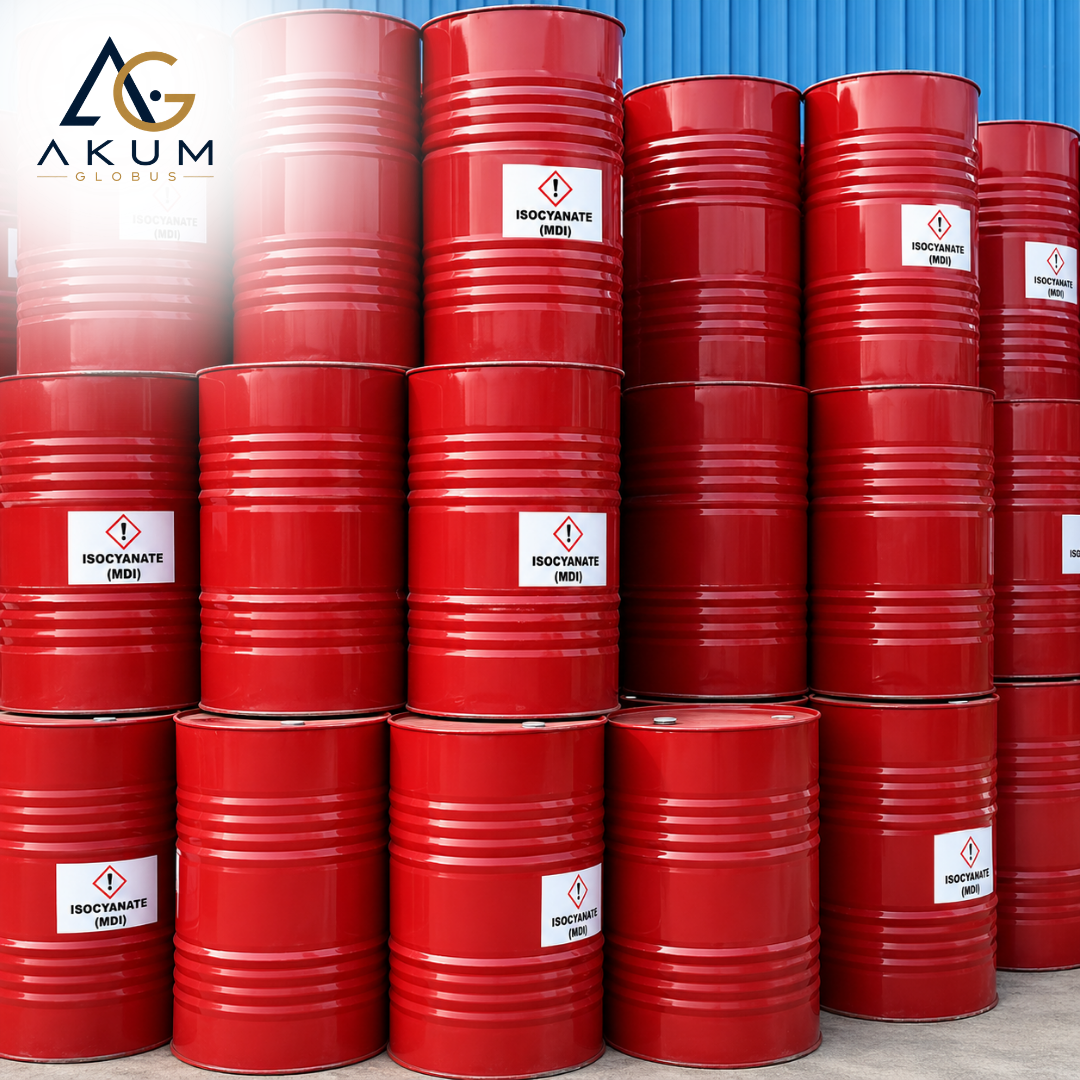
Rigid Polyols are built for insulation, where the foam must fill a cavity, bond to its facing and hold a low thermal conductivity for years. The grade is chosen for hydroxyl value, viscosity, cream time and the closed-cell content it can deliver with a given isocyanate. Akum Globus Pvt. Ltd. supplies rigid polyether polyol in steel drums and IBC tanks to insulation panel manufacturers. The search for top rated Rigid Polyols manufacturers usually begins with a panel cavity fill that has to work first time.
Which hydroxyl value and viscosity keep a rigid polyol flowing to the far end of a panel cavity before the cream begins to rise? A moderate hydroxyl value gives the mix enough open time to travel, while a viscosity low enough to pump but high enough to hold the mix together prevents a thin, uneven flow. Cavity depth, injection point and panel width decide the compromise. On a long panel the cream time matters more than headline reactivity, so the rigid polyol flow window is the figure to fix first.
Can a rigid polyol be matched to a continuous lamination line as well as a discontinuous press? Yes, but the two processes ask for different behaviour. A continuous line wants a short cream and a fast cure that follows line speed, while a discontinuous press tolerates a slower fill and a longer closed time. The polyol, the catalyst and the injection layout are adjusted together, and one grade often serves both once the catalyst package separation is set.
A rigid polyol earns its place when the panel comes out flat, closed and bonded, and when the next batch behaves the same way every time. Flatness follows dimensional stability, thermal performance follows closed cells, and bond strength follows how well the mix wets the facing before it gels. Panel plants that stay with best Rigid Polyols suppliers measure success at the end of the line rather than at the drum.
What decides whether a rigid foam panel is flat when the press opens? The polyol, the facing and the line speed, in that order of suspicion. A panel plant comparing top rated Rigid Polyols manufacturers with the best Rigid Polyols suppliers should agree hydroxyl value, viscosity and cream time against the cavity before a drum is offered for a trial.
Hydroxyl Value for Strength : The hydroxyl value sets the crosslink density that gives rigid foam its compressive strength, so it is matched to the load the panel carries, and a compressive strength target is agreed before the grade is fixed.
Viscosity for Cavity Flow : Viscosity controls how evenly the mix flows into a panel cavity, and it is checked so a long panel fills without a heavy edge or a starved centre, which is the practical meaning of cavity flow control.
Cream Time Against Length : Cream time is reviewed against panel length and injection point, because the mix has to reach the far end before the reaction thickens, and a panel length cream time is set for the longest cavity on the line.
Closed Cell Performance : Closed-cell content governs thermal conductivity and moisture pick-up, and the grade is chosen to hold both for the service life of a cold-room panel, so closed cell content is treated as a specification rather than a hope.
Dimensional Stability Checks : Dimensional stability keeps the core flat through summer and winter cycles, so a panel does not bow on the wall or pull away from its frame, and dimensional stability testing belongs in the approval.
A panel plant cannot correct a polyol after the foam has risen, so the checks belong before dispatch. Buyers who weigh top rated Rigid Polyols manufacturers against the best Rigid Polyols suppliers should ask for the figures that matter to a cavity, and a supplier who publishes them makes approval quicker.
Rigid polyol goes into PUF wall panels, cold-room ceilings, sandwich panel cores, insulated water tanks and HVAC duct sections, and each of those products demands something different from the foam. A wall panel cares about flatness and bond, a ceiling about thermal performance, a duct section about fire behaviour as well as insulation. Plants that start from top rated Rigid Polyols suppliers select the grade for the duty.
PUF Wall Panels : Wall panels need a core that fills the cavity, bonds to both facings and stays flat, so the polyol is chosen for flow and dimensional stability together, and PUF wall panel cores are trialled before a long run.
Cold-Room Ceiling Panels : Ceiling panels carry their own weight and face a steep temperature gradient, so the foam must stay closed and bonded through repeated freeze and thaw, which puts cold room ceiling insulation under real stress.
Sandwich Panel Cores : A sandwich core has to hold its thickness under the press and keep the skins apart in use, which puts a premium on compressive strength and cure through the panel, so sandwich panel core density is fixed early.
Insulated Water Tanks : Tank insulation must bond to the shell and resist water pickup, so the polyol is matched to a closed cell and a stable cure around a curved surface, and insulated tank foam bonding decides how long that shell performs.
HVAC Duct Sections : Duct insulation combines a thermal target with a fire requirement, and the polyol has to support both without losing adhesion to the metal facing, so HVAC duct insulation is specified with both figures in view.
The common thread is a foam that stays where it was poured and keeps its cells closed. Panel producers who match the grade to the product, rather than to the price list, spend less time trimming and rejecting, and top rated Rigid Polyols manufacturers make that match on the first trial.
Can a rigid foam problem be solved after the panel is pressed? Rarely, which is why the grade has to be right at the drum. Buyers who compare top rated Rigid Polyols manufacturers with the best Rigid Polyols suppliers expect a recommendation built from the construction, the facing and the line speed, not a generic rigid foam description.
Grade Chosen for Panel : The recommendation starts from the facing, the cavity depth and the line speed, so the polyol suits the product rather than a drawing note, and a panel specific grade is agreed before a trial drum is sent.
Flow Checked on Length : Long panels are discussed before a grade is fixed, because a polyol that fills a one-metre section may starve a six-metre cavity at the same injection point, and long cavity flow is checked on the line.
Closed Cells Protected : Closed-cell content is the figure the grade is selected on, since thermal conductivity and moisture pick-up both depend on cells that stay intact, and closed cell protection is what a cold-room panel is really buying.
Summer and Winter Flatness : Dimensional stability is treated as a year-round requirement, because a core that bows in summer or contracts in winter shows at the panel joint, and year round flatness is tested rather than promised.
Trial Before Contract : A trial drum is offered before a long-run commitment, so the plant can press a panel and check flatness, bond and density, and a trial before contract is cheaper than a rejected first load.
A rigid polyol is a small part of the panel cost and a large part of its reputation. Plants that compare top rated Rigid Polyols manufacturers and the best Rigid Polyols suppliers on cavity flow and flatness usually find the cheaper grade costs more at the trimming station than it ever saved.
Send the panel construction, the facing material, the density target and the delivery details to [email protected], with the monthly volume. The response suggests a hydroxyl value and viscosity, a trial quantity and the drum or IBC packing. Hydroxyl value, the packing and the loading date are confirmed in writing before the first load is scheduled.
Explore our range of polyurethane chemicals and specialty solutions developed to support efficient processing, formulation flexibility, consistent quality, and reliable industrial performance.
Copyright © 2026 Akum Globus Pvt. Ltd.. All Rights Reserved. Designed By HD Smart Media