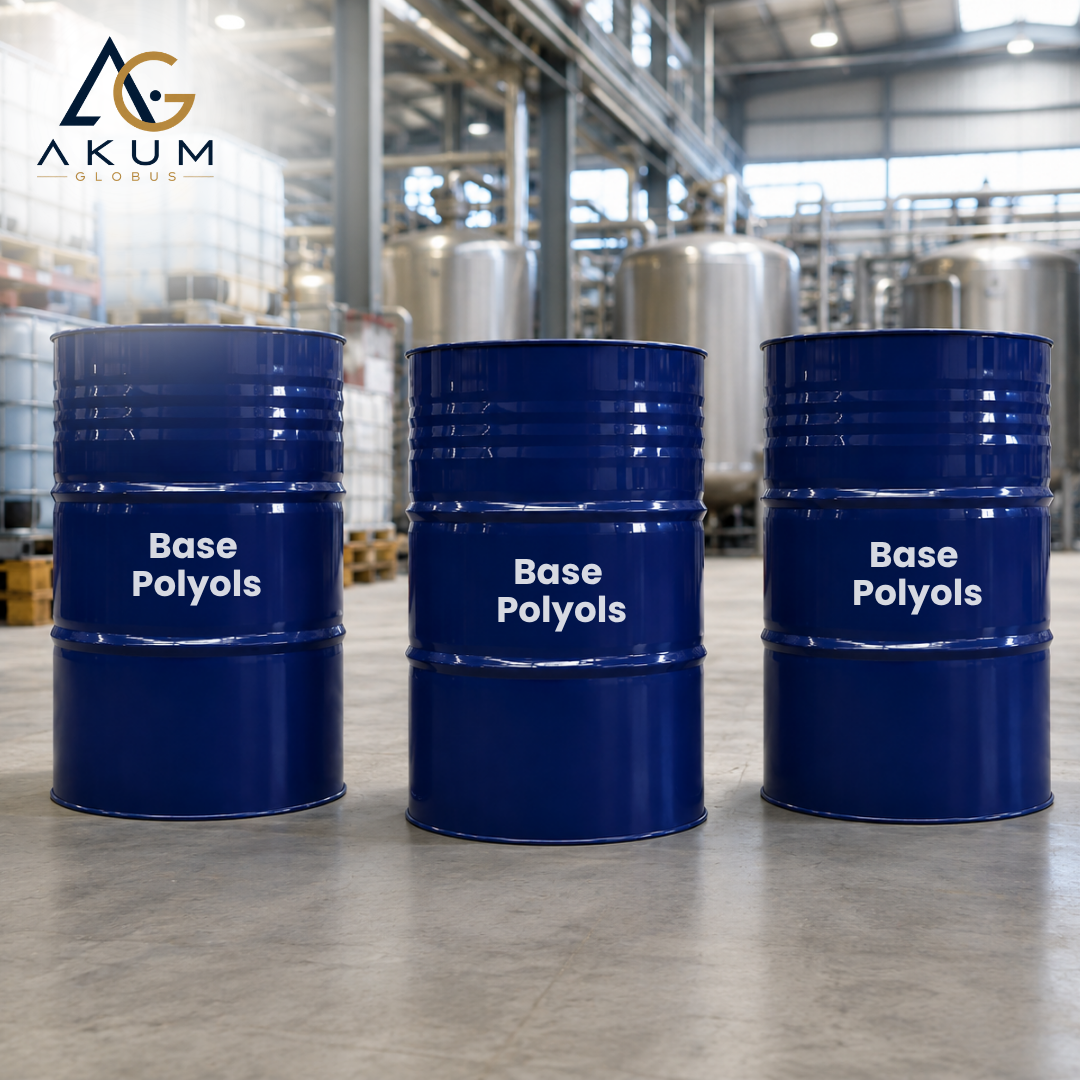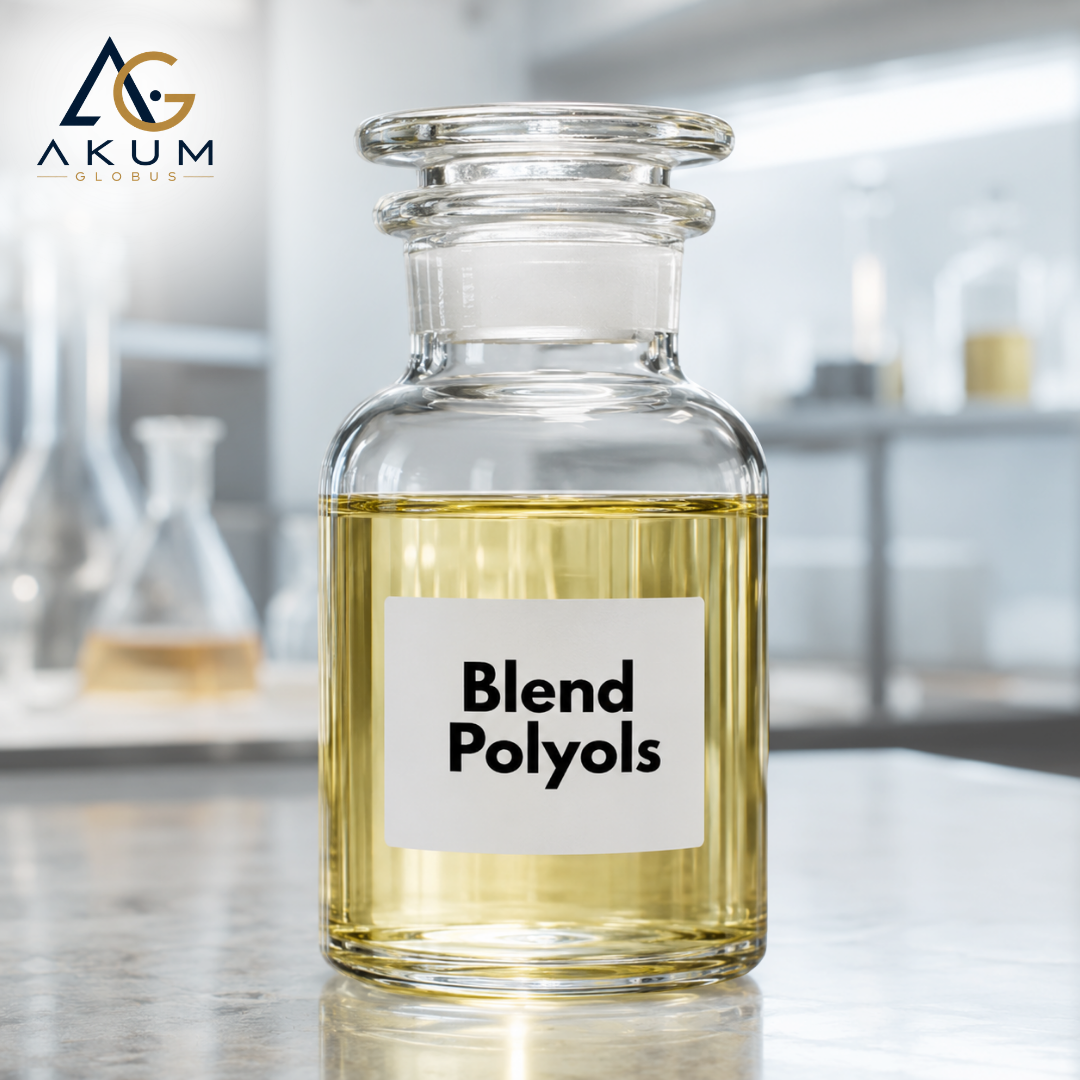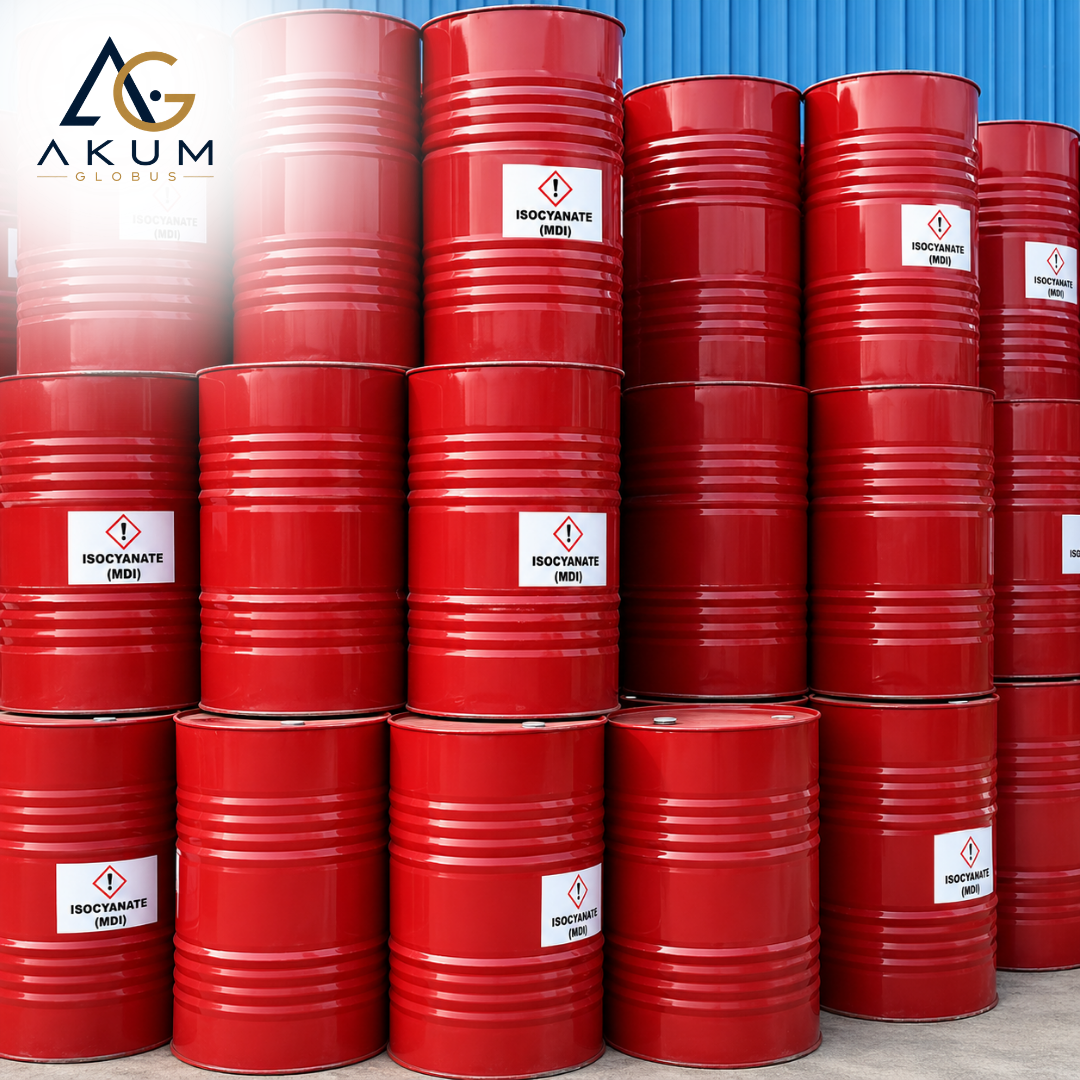
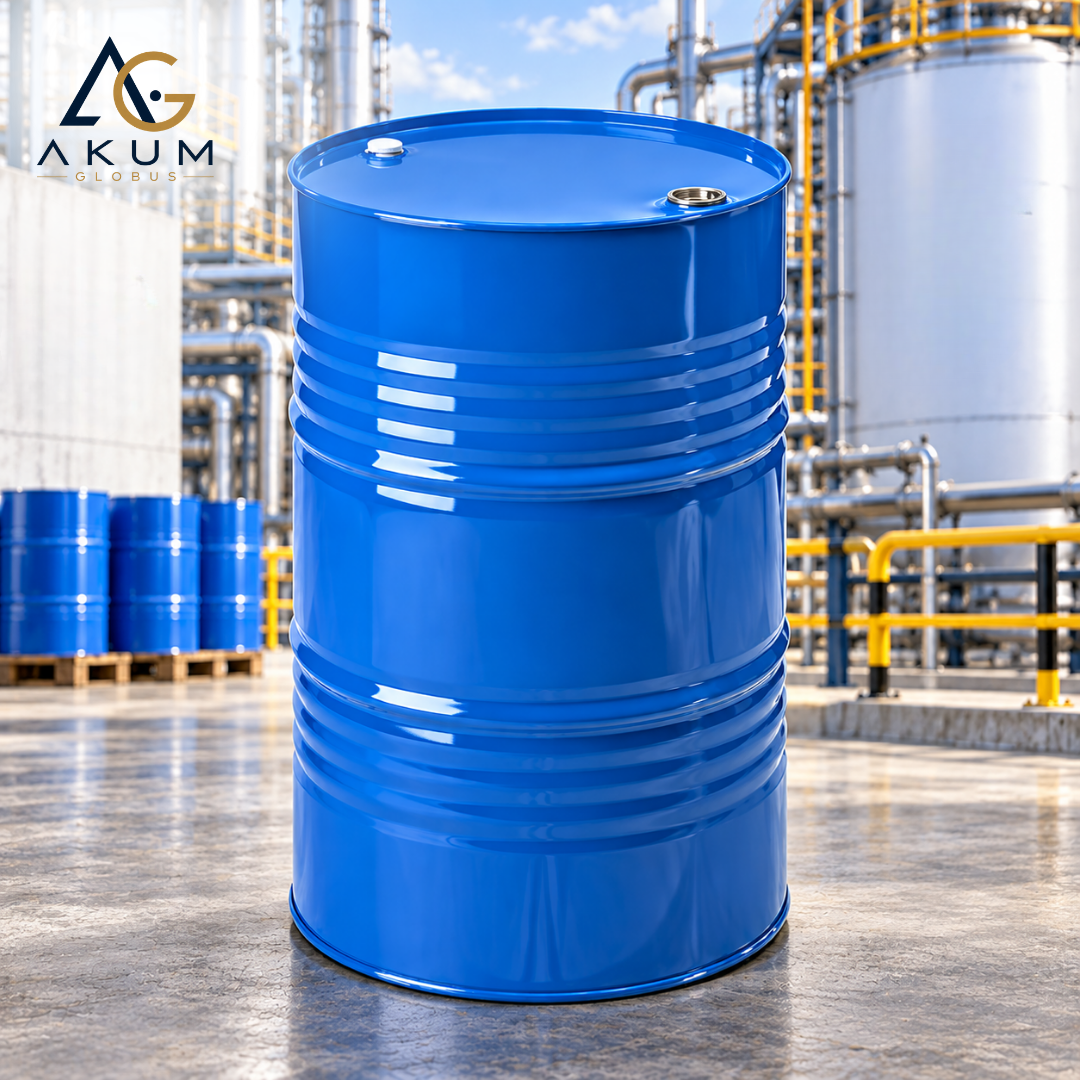
A panel press is a blunt judge of a chemical. The core either fills to the far edge, bonds to its facing and comes out flat, or the whole run goes to scrap, and no certificate compensates for a cavity left short. Akum Globus Pvt. Ltd. supplies rigid polyether polyol in steel drums and IBC tanks to plants making PUF panels, cold-room ceilings, sandwich cores, tanks and duct sections. Top rated rigid polyol manufacturers are the ones whose grade behaves the same in the tenth container as in the trial drum.
Which rigid polyol specification should be fixed before a panel plant commits to a long-run supply contract? Settle the hydroxyl value first, because it sets crosslink density and compressive strength, then viscosity for cavity flow, cream time for edge filling, closed-cell content for thermal conductivity and dimensional stability for a flat core. Writing those five down, alongside the isocyanate index they will run against, gives a buyer something concrete to hold a long-run rigid polyol contract to.
Can a rigid polyol be supplied against a plant's existing isocyanate and still meet the same density target? Usually yes, provided the hydroxyl value is matched to the index and the catalyst balance is proven on a trial panel rather than on a live line. A continuous lamination line and a discontinuous press ask different things of cream time, so the matched rigid polyol grade is confirmed on the machine, thickness and speed the plant actually runs.
Rigid foam plants change facings, panel thickness and line speed, and the grade has to stay steady while everything around it moves. That steadiness is what a long contract buys: the same cell structure in the monsoon and in the dry months, the same bond to a steel or aluminium skin, the same density figure on the dispatch note. Buyers who shortlist best rigid polyol suppliers are really testing how little the foam will change over a year.
What happens to a panel core when the grade behind it drifts in hydroxyl value? Usually nothing visible for a week, then a bow, a soft edge or a rejected run. Top rated rigid polyol manufacturers test for that drift before dispatch, and the best rigid polyol suppliers send the batch record with the drum. Akum Globus Pvt. Ltd. supplies rigid polyether polyol to panel manufacturers on that footing, in steel drums and IBC tanks.
Crosslink Density for Strength : Hydroxyl value decides how tightly the polymer network crosslinks, and crosslink density is what a panel core feels as compressive strength. The figure is confirmed against the approved value before dispatch, so a compressive strength target is not left to chance on the press.
Flow Through Thin Cavities : A rigid mix has to reach the far end of a cavity before it creams, and viscosity governs how evenly it travels through a narrow panel gap. Viscosity matched to cavity depth keeps the pour from stalling short and leaving a void at the edges.
Cream Time and Line Speed : Cream time is agreed against the line speed, so a continuous lamination run and a discontinuous press each receive a grade that starts to rise at the right moment. Setting cream time for the line avoids both a short fill and a mix that sets in the head.
Closed Cells and Heat Flow : Closed-cell content governs thermal conductivity and moisture pick-up, and it is checked beside density rather than left to the first cold-room test. A core with its closed cell structure intact holds insulation value through years of service.
Flatness Through the Seasons : A core that moves with the weather will bow a panel or pull away from its facing, so dimensional stability is treated as a specification item. Dimensional stability after cure is what keeps a roof panel flat in a hot month.
Drums and IBC tanks are sealed, labelled and checked before loading, so a plant can release the grade against the documents used for the last contract. That routine is why top rated rigid polyol manufacturers and the best rigid polyol suppliers are retained, while cheaper drums are trialled once and dropped by manufacturers who cannot afford a failed run.
Rigid polyol reaches a plant in several forms of work, each loading the foam differently. A wall panel wants flow and adhesion, a cold-room ceiling wants a low thermal value, a tank shell wants a bond that survives filling and draining. One grade serves all of them once density and index are settled, which is why top rated rigid polyol supply is planned around the product, not the drum.
Wall and Roof Panels : A long, thin cavity has to be filled and bonded to both facings, so the grade is chosen for cavity flow and a cream time that matches lamination speed. Panel cavity fill is the test that matters, not a laboratory figure alone.
Cold Room Ceilings : Ceiling panels carry their own weight above a room held below zero, which makes closed-cell content and dimensional stability the first two properties a contractor asks about. Low temperature insulation depends on a core that stays closed.
Sandwich Panel Cores Duty : A sandwich core must come out of the press flat, so density and polyol viscosity are settled together with the facing material and the panel thickness. Core flatness after pressing is the figure a buyer should insist on.
Insulated Tank Shells : A tank is filled, drained and left in the sun, and the foam has to stay attached through those cycles. Bond strength to the shell decides whether the insulation survives its first summer.
Duct and Equipment Sections : Duct insulation runs in narrow sections that are cut and handled on site, so the core needs a fine cell and enough strength to survive installation. A fine closed cell structure keeps a cut edge from crumbling.
Because each of these products loads the foam in its own way, the grade is confirmed against the actual panel or section rather than against a single laboratory number. That is how best rigid polyol supply is proven, one accepted run at a time.
What is a long-run polyol contract actually protecting? Not the rate on one drum, but the plant's ability to run the same panel next quarter without a fresh trial. Top rated rigid polyol manufacturers understand that, and the best rigid polyol suppliers price for consistency rather than for a single load. Akum Globus Pvt. Ltd. keeps rigid grades in steel drums and IBC tanks so a press can be supplied without a long wait.
Grades Matched to Index : A rigid grade is selected against the isocyanate index the plant already runs, so the density target is reached without rewriting the formulation around a new polyol. Index matching before dispatch saves a trial panel.
Trial Panels Before Bulk : A trial quantity is supplied for a run at the plant thickness and line speed, which shows how the foam flows and bonds before a contract is signed. Trial panel runs settle more questions than a data sheet ever will.
Sealed Steel and IBCs : Rigid polyol is packed in steel drums and IBC tanks, sealed against moisture and labelled with the batch, so the grade arrives in the condition the press expects. Sealed packing on every load protects the figures inside.
Documents With Each Batch : A certificate of analysis, safety data sheet and batch number travel with the consignment, which keeps a quality file complete without a follow-up call. Batch documents on arrival let a plant release the grade the same day.
Dispatch on Plant Timing : Deliveries are planned around the press schedule, with packing and freight basis agreed before dispatch, so a plant can hold a working buffer instead of a warehouse. Dispatch planned to production takes the guesswork out of storage.
For a plant running the same panel family for months, that consistency is worth more than a small difference in rate. It is also why top rated rigid polyol manufacturers and the best rigid polyol suppliers keep their place on the approved list, while one-off vendors are tested once and forgotten by manufacturers who count every rejected panel.
Send the panel type, the density target, the isocyanate index in use, the monthly volume and the delivery details to [email protected]. The grade recommendation, its specification, the drum or IBC packing and the dispatch schedule are confirmed in writing before the first load moves, so two offers can be compared on the same technical sheet.
Explore our range of polyurethane chemicals and specialty solutions developed to support efficient processing, formulation flexibility, consistent quality, and reliable industrial performance.
Copyright © 2026 Akum Globus Pvt. Ltd.. All Rights Reserved. Designed By HD Smart Media